Wednesday, June 25, 2014


Rhubarb and Rain


For the last three years, we have supplied over 200 pounds of rhubarb to one of the largest CSAs in Vermont.  They can grow everything else, from artichokes to Asian greens, but they can't grow rhubarb.  So they buy it from us.  This CSA is as popular as Misty Knolls Farm, who has the corner on local "free-range" poultry, but that's another story.

Our rhubarb patch is about 80 feet long and is made up of plants that we transplanted from my childhood home in East Middlebury (the plants were there when my parents bought the place in 1962), and from some plants dumped on the side of the road that Kyle lugged home after upheaving the FREE! sign.  

Kyle has babied these plants, keeping them weed-free, dosing them with copious amounts of aged manure, mulching them, reigning in my overzealous harvest.  The plants are beautiful.

 So on this day, Kyle and I harvested the rhubarb for that big CSA, who said that a truck would be coming bright and early to pick it up.  We picked 190 pounds of beautiful stuff, the same stuff that we have been selling at Norwich Farmer's Market for the past four weeks.

Four hours later, after it had been harvested, washed, boxed, and weighed, I get a message on my cell phone that said:  I can't find you, you need to meet me at the interstate; I don't have a cell phone.

Who does not have a cell phone in this day and age, whose job depends on constant communication?

Naturally, I 'm freaking out, calling the company that has the CSA, calling the trucking company who is supposed to be picking up my precious rhubarb.   Finally, eight hours later, the trucker finds our farm and gets the rhubarb.

The next day, I get a call from the CSA,saying how they could only use 146 pounds, and could they have a discount on the rest, cuz it took a long time to pick through all of the bad stuff.

At this point, I am just trying to do my yoga breaths and not fly off the handle.  I then explain AGAIN how the driver hadn't found the right address and had actually missed pick up so that he was 7 hours late.  I tell them, that yes, I'll eat the 44 pounds of the precious stuff that is useless, but no, I am not going to do a discount for the time it took to pick through the rhubarb- they need to be equally responsible for the trucker's error.

To date, I have not heard about whether I will be paid at all- $380 worth, and perhaps, the last time that I will be supplying them rhubarb.

All I can say is that the "local" movement stopped treating small farms like what we are very shortly after local,sustainable, and CSA became buzzwords.  I am saddened by the fact that this mega CSA won't stick by their local, small producers (the company spokesperson actually chided me and said that the can only offer quality product to their consumers).  In years past, the truck has come when and where he said he would, and the CSA has been thrilled.

I'm really not sure why I'm complaining about this, other than the fact that our tiny farm now has a tarnished rep as a rhubarb supplier because the buyer gave the transportation company the wrong address.  I guess I thought that local meant Vermont, but maybe I need to be even more local….

Here's a pic of my local supper...

Wednesday, May 28, 2014

Homage to Lovage

I don't even know where I got my Lovage from.  It was a long time ago, I know that.  And I think I got it just because it sounded like a cool word.  Most people don't know how to pronounce the herb's name, let alone what to do with it.  Lots of people ask me at market what to do with "love-ahhjeh"

Europeans and English folks are much more comfortable using it.  They put it in soups, fold it into egg dishes, toss it with asparagus and green beans, even dry it and combine it with more traditional herbs, like parsley and sage and thyme.

What's best about lovage, like dandelion and nettle, is that it pokes its lime green head out of the soil and announces Spring like one of those first hot days does- even when hot means 60 degrees, and not 16 degrees.

It reminds me of one of those brilliantly colored songbirds, gone for so many months, now back at the feeder, tasting the oranges that we've laid out to lure them close for that fleeting moment before they head off to the forest.  One day last week, I had a rose-breasted grosbeak, a northern oriole, an indigo bunting and a scarlet tanager ALL in the same platform feeder.  Lovage is like that: it's here first, so it begs to be used. Who would think that an indigo bunting would be attracted to an orange in a feeder.

The thing about lovage is that a little goes a long way.  It is in the celery family, but it's spicier- like a cross between fennel and black pepper- and bitter- like arugula or orange zest.  People are scared of it here.  What do you do with it, they ask at market.  And so, I made pesto out of it to show everyone how versatile it is. In the raw, I sprinkle it on asparagus (it tames the sweet), put it in deviled eggs (brings out the creamy yolk), steep it in soup (best with poultry, again, taming that sweetness).

I guess my point is that just because it's different, doesn't mean it's not good.  The songbirds that have travelled hundreds of mile know this when they come to our yard in search of oranges before retreating to the forest.  And we should experiment with learning how to use what comes back to us in spring.  That means to me using one of the first of my perennial herbs to come back to life in the garden.  Here are two great recipes that have passed the teenager's and the midwestern meat-and-potatoes' taste buds.


Asparagus Sesame Soup
serves 4
1 pound asparagus
1/8th cup peanut oil
1 1/4 cups chopped onions
1/4 cup minced scallions
1 large all-purpose potato, peeled and diced

1/2 quart chicken stock
pinch of sugar
2 tbs toasted sesame seeds
1 1/2 tablespoons soy (or tamari) sauce
1 tbs sesame oil
ground black pepper, to taste
1 tbs chopped lovage for garnish

Snap the ends off of the asparagus, or alternatively, peel the first two inches.  Cut off 1 inch of the tips and reserve.  Slice the remaining stalks thinly.

Heat the peanut oil in a saucepan or soup pot that is big enough for all of the ingredients.  Add the onions and scallions and stir over medium heat until wilted and soft, but not browned.  Add the potatoes and the sliced asparagus.  Pour in the stock, the sugar and half of the toasted sesame seeds.

Bring to a simmer, cover, and cook until all ingredients are tender, about 20 minutes.  Then pour the soup into a blender and blend until smooth.

Add the reserved tips, the soy sauce, sesame oil and pepper.  Sprinkle individual bowls with the chopped lovage.  
The soup is good chilled or hot, although I prefer it hot.

Adapted from Judith Olney's The Farm Market Cookbook 1991


Lovage Pesto

makes about a half pint

3 large cloves garlic peeled and chopped ( or 4 tbsp chopped wild leeks)
1/4 pound lovage leaves, stems removed
1 cup extra virgin olive oil
1/2 pound (about 2 cups) walnut pieces
2 teaspoons sea salt

Put the garlic or wild leeks in a food processor or blender, then the lovage and half of the oil.  Blend until smooth (I sometimes add a bit of water to help the process along).  Add the walnuts and the remaining oil and salt.  Let it sit for at least an hour before using.  It will stay good for about 2 weeks in the fridge.

From Barbara Kofka's Vegetable Love 2005


Friday, May 16, 2014

Eating Spring's First Weeds

The first time I heard that dandelions weren't native to North America, I didn't believe it.  Then came the hard truth that Vermont's state flower, the red clover isn't a native.  Then earthworms (well most species), potatoes, garlic and all apples except the crab apple fell from grace.  I think I nearly lost it when I found out honey bees had been imported.

To most of us, the dandelion is considered a weed.  Unless you're making a dandelion chain necklace, or playing the mommy had a baby and… you know the rest- game, it's regarded as a troublesome pest.  It invades our gardens and lawns, and those gorgeous yellow flowers turn into poofy,white turbans that stick to everything and fly everywhere.

But in Vermont, where there are literally 9 months of winter, when those first Spring shoots come poking out of the ground, they are cause for celebration.  And their astringent, earthy taste is just the tonic we crave after months of grocery store produce that all tastes like wax boxes and is as crunchy as cardboard.  Like radicchio and chicory, it's a breath of fresh air after weeks of iceberg, or if you're a real purest, no greens at all.

I've used dandelion greens for tea, raw in salads, and chopped in smoothies.  The greens are best before the flowers come out of their pin cushion-like knobs, and they certainly are too bitter to eat after the flowers are in full bloom (though the blossoms make awesome wine).  I chop the base off, pull out any leaves that have hung on through winter's cold (they'll be pale and wilted), and steam them. Then I rinse them and squeeze all of the excess moisture out. I chop them fine and use them as I would steamed spinach or kale.

Besides my pursuit of how best to eat weeds, I am a bit of a cookbook hoarder.  People ask me why I still read cookbooks now that everything can be found on  Dr. Google.  I just like the feel of the book in my hand, and the ability to jump from page to page and back again without getting dizzy when those pages go flicking by on my Kindle or my monitor.

I have Judith Olney's The Farm Market Cookbook (1991).  In it, she describes farmer's markets across the country and how they've contributed to bringing the farm back to the table.

Bradford, age 8, enjoying dandelions


There is a recipe for Maggie's Spinach Nutmeg Muffins for which I used dandelion greens instead of the spinach called for, and used smoked gouda cheese instead of Swiss cheese (dandelion greens are amazing with bacon, so the smoked cheese kind of reminded me of that pairing).

Ironically, I googled Maggie Middleton, who at the time of Olney's writing, owned with her partner, a burgeoning bakery business in Carrboro, NC.  She retired from the business just 6 years later, died in 2009, and requested that donations in her name go to LIVESTRONG, Lance Armstrong's charity.   How fickle life is, where we perceive one reality, and it later turns into another.  Perhaps fame, instead of scandal, will some day be the fate of the harbinger of spring here in the northeast, the dandelion weed.

Here is an adapted version of Maggie Middleton's muffin recipe from Olney's book. I made them using gluten-free flour, and they were awesome.

2 cups all-purpose flour or gluten-free flour
1 1/2 teaspoons baking powder
1/2 teaspoon baking soda
1/4 teaspoon nutmeg
2 tablespoons sugar
1/2 teaspoon salt

1 cup buttermilk
2 tablespoons butter, melted
1/2 cup grated smoked gouda cheese
1/2 cup grated parmesan cheese
1 egg
10 oz dandelion greens, washed well, base chopped and discarded, steamed and squeezed dry


Preheat oven to 400 degrees F.  Grease a 12-cup muffin tin.

Stir the dry ingredients together in a bowl.

Chop the cooked dandelion greens.  In another bowl, combine the greens, buttermilk, butter, half of each of the cheeses and the egg.

Make a well in the dry ingredients, and stir in the the liquid.  Don't combine them to a smooth consistency- they can stay chunky.    Spoon the batter equally into the tins, sprinkle with the remaining cheese, and stick them in  the oven.

Bake for 20-25 minutes.  Remove the tin from the oven, and let rest for 5 minutes before popping them out. 

These are great with cream of asparagus soup.  You'll have to pull out a cookbook or google that recipe.


Wednesday, March 28, 2012

Horseradish


 We’ve just come off of seven days of unusual heat, with five of the days being record-breakers.  The spring peepers, green frogs and wood frogs have been singing up a storm and laying eggs.  Bradford held jellyfish-like clusters of eggs in his hands in our flooded fields and pleaded to bring some home to raise.  My magnolia is blooming, as is the redbud, the crab and the flowering almond.  The daylilies are poking out of the ground almost 5 inches high, and the garlic is pushing 6 inches.  It’s the middle of March.

Tonight, I’ll cover what I can, but frankly, I think we’re doomed for a major setback.  All day, since 4 am, the wind has been howling, and the temperature dropping.  I even kept the sheep inside today, despite the sun.  They are freshly shorn (meaning their wool has been removed), and I wouldn’t appreciate being out in this without a winter coat if I were them.

The plants have definitely been confused by this climate change, but surprisingly, the birds are still right on schedule.  I’ve kept a log of what arrives back on the farm since 1997, and they are within a week of normal.    

On the other hand, Kyle harvested horseradish yesterday (we usually do this in the fall, but there were some escapees from the raised bed).  I also harvested wild leeks that are usually blanketed under many feet of snow at this time.  The mosquitoes were out in full force as I put an electric fence around the wrapped hay bales (the sheep are blowing through the single strand fence to get at the lush, green grass), and the ticks are crazy bad.

Did you know that horseradish is actually a Brassica, meaning it’s related to broccoli, cabbage and mustard?  It’s been used since the middle ages, mostly medicinally back then, and its origin is most likely south eastern Europe or western Asia.

We tend not to use it much as Americans, unless it’s on our roast beef, in our shrimp cocktail sauce or as an essential ingredient to a bloody Mary.  The stuff we Americans think of as Wasabi is usually not the root of the Wasabi plant (which although is related to horseradish is generally not found outside of  Japan due to the difficulty in propagating it).  Instead, what we call Wasabi is a mixture of horseradish, mustard and green food coloring.  Still good though.

Horseradish is a perennial and pretty easy to grow.  The best way to harvest it is in the fall, when you divide the roots; older roots will get woody and tough, whereas new growth is slender and spirited.  I like to prepare it with vinegar, salt and a little mustard oil (you can get this at ethnic markets).  It’ll keep in the fridge for months, but when it starts turning brown, it’s lost its zing.  Propagating it is pretty simple too; just pull the whole root out and lop off the top inch or two with the new growth.  Stick it in the soil medium, and water it until it develops new roots.  Then transplant it into your bed outside.

I’m eating horseradish now, as the wind whips by the farm, bringing with it the sting of a March going out like a lion.  We all knew it was abnormal to have sunburns at this time when we’re usually slogging through mud and snow.  Hopefully the rest of spring will even out in temperament.


Braised Pork with Vinegar, Horseradish and Mashed Potatoes

Pork:

2 tbsp oil

2-3 pounds of pork shoulder, fresh ham, or chops

Salt and pepper

2 cups onions, sliced or small, whole

½ cup red wine vinegar

½ cup dry red wine

Parsley for garnish

2 tbsp prepared horseradish


In a Dutch oven or covered cast iron casserole dish, heat the oil.  Add the meat and brown on both sides, turning every so often (about 2-3 minutes).  Season with salt and pepper as you do this.  Use medium heat so the fat doesn’t burn.

Take the meat out, then add the onions, vinegar and wine.  Cook until the onions are translucent.    Shred the meat and return it to the sauce.  Serve over mashed potatoes.  Garnish with parsley and prepared horseradish.

Mashed Potatoes:

Russet Potatoes, quartered, scrubbed, but not peeled

Cream

Salt and Pepper

Put the quartered potatoes in a pan and fill 1/3 with cream.  Cook gently, covered, until the potatoes are soft.  Mash lightly (don’t mix them too much, or they’ll turn to mush) and season to taste with salt and pepper.   Keep warm.

Monday, August 22, 2011

The Power of a Small Storm


I can’t recall how many times I’ve said this summer; thank god I’m not farming this year.  Not in the true sense of the word, anyway, not with apprentices and farmer’s markets on Saturdays and Wednesdays, not filling wholesale and retail accounts on Tuesdays and Thursdays and Fridays.

For one, we’ve had one of, if not the most rainy springs on record.  Our fields were so compacted that when we went to dig up the garlic, Kyle had to double dig them with a spade fork, and then I still had to pull and clean the heads.  They made it, though, and we’re selling all that we can process, just Kyle and I.  It makes for long hours sitting in the dust and chaff of the hay mow, cutting and trimming, then smoothing the outer dried and dirtied skins off.  Sometimes Pat the barn cat or Moomee  the housecat joins me, sashshaying back and forth, looking for attention.  Occasionally, a hen will enter and wonder what I’m doing there, sitting in the dusky light, peeling and humming.

As far as the other crops, most of the gardens have been rotated through cover crops that are intended to suppress weed growth and beef up the biomass in the soil.  Our mustard trials look like they did well:  they held the dreaded Galinsoga  weed at bay while feeding the honey bees and a myriad of other insect life.  Then, the plants contributed a ton to the soil, first mowed, then plowed into the earth.

After the mustard, we planted buckwheat for the bees.  It’s also a great weed smother crop, but there are those that swear cover crops don’t do anything to suppress weeds.

Which brings me to another favorite topic- the very idea of what is or isn’t a weed.  I try very hard to instill in my son the need to remember that destroying some form of life just for the heck of it is not acceptable; the line we draw on what we destroy is a little hard to justify, however.  Why, he asks, is it okay to kill a tomato hornworm, bent on destroying the tomatoes, but not the swallowtail caterpillar, eating through the dill and fennel?

Or how about the topic of the “invasives”, those plants considered a menace to ecosystems, like kudzu vine, or honeysuckle or bittersweet.  They’re taking over the landscape, changing it, altering the rest of the life there.

Then there are the honeybees, non-natives from Europe, who have almost certainly displaced natives here, but who give us sweet honey.  And how about earth worms, also not native, but carried over in the timbers of tall ships from across the seas, that now have permanently altered the soil structure in our forests and pastures and have most certainly added to its fertility.

Today, a thunderstorm has visited us twice.  First, with winds so strong that they brought down black locust trees and our fields of corn, just tassled and ready to begin ripening.  Hail, the size of marbles pelted  the plants and cars and machinery.  Beautiful to look at, but not so much if you’re a zucchini plant.   Or Nancy, the little Modern Game bantam hen, who miraculously hatched out five chicks and has raised four almost to fledging (independence).  At one point during the storm, I looked out and saw her and her brood being swept across the driveway in the wind and driving hail and rain, and screamed to Kyle and Bradford to come rescue them (I have broken my foot and am up to my knee in a cast, so am quite useless).    The two boys found the brood, stashed behind a rock here and a piece of wood there and brought them, dripping wet, into the house, to their cockatiel cage, where they reside at night.

Every time a thunderstorm comes, it fixes nitrogen, and thus it’s instant fertilizer.  That’s why it looks so green after a thunderstorm.  For this, I can give thanks; for my flattened corn, I’m not so happy.

Bradford and Kyle spent the afternoon cutting up the tree that crashed across the round bales of hay .  I swallowed a pit inside my stomach, watching my little son, who is not so little anymore, driving the tractor by himself to the pit with the tree’s limbs, while his father carved up the tree.  

It’s the little storms that seem to mask the big transitions without anyone noticing.   And in one summer, while the farm was at rest, my boy has been growing, fast- forward, toward not being a baby anymore.

Good thing this empty nest needs a wicked good cleaning.

Thursday, April 21, 2011

April

By the time we Vermonters reach April, we’re usually pretty tired of the raw, cold Northeastern weather. Even more so because the weather tricks us with brilliant days of sunshine and temperatures in the 60s, only to fall back down into the freezing cold 20s and blustery winds that accompany. I always tell people that it snows on my birthday (the 12th). Today, it’s snowing, spitting, not quite sure it’s ready to give up the ghost of winter. A winter, which I might add, is one reminiscent of the ones that I remember when I was a child- snowy, cold and long.

The snowplow knocked the entire western part of our fence down, careening mounds of snow from Morse Road into the adjacent pasture. Kyle spent two hours digging and burying new corner posts, just one small step toward fixing the fence that keeps the animals from jaunting down to Route 14. Which is what the calves (I call them the three mooskateers) learned to do, ditching over the downed fence, and running head-long toward the busy road. The ground was frozen when they first learned this game, so they’ve spent the last three weeks tied up in the barn. More work for us, mucking out stanchions, and less sunlight for them. Yesterday, the ground was finally soft enough that I was able to put up portable fencing to make a temporary paddock (I don’t want them out on the fragile pasture just yet), and out they went this morning.

For those of you who’ve never seen a cow cavort, it’s highly unnatural. Cows don’t tend to run for fun; they run if they feel threatened. So they don’t kick up their heels naturally, like a colt or a lamb would, and they don’t know what to do with their tails. Whoever decided that a cow can’t express joy has never seen one who’s been let outside after three weeks of confinement. They bark low grunts and blow foam from their mouths and bend their backs while trying to keep their feet under them (but they can’t resist the urge to splay them this way or that). They hold their tails high up over their backs, wagging them madly back and forth, like some victory flag. The mooskateers play Daytona 500 around the round bale of hay, not interested in eating just yet.

I fully intend to see them blow through the temporary fencing, because the calves have not yet been trained to electric fence, and the moms, well, they’re too blissed out to care.

Most of the lambs went to the Easter market last Sunday. The barn is slowly returning to normal, without 35 lambs running up and down the aisles and the 300 pound barn-bound calves no longer knocking over buckets and shovels and pulling halters off the walls. By this time last year, we had crops in the ground: lettuce, spring onions, spinach, chard and kale. The animals were out on pasture. In 2009, I remember Shannon and Tyler house sat for us while we were in Maine, and the temperatures soared to the 80s. Good thing I’m not trying to grow stuff for market this year!

Instead, I’m spending my time foraging in the woods for fiddleheads and wild leeks. May flowers are out (round-lobed hepatica), and the trillium and jack-in-the-pulpit are peeking up through last year’s leaves. Make no doubt about it: mud season is still in full swing. But spring is trying, and when it finally gets here, I’ll probably kick up my heels and dance like a cow in the sunlight.


mud season

pot hole


wild leeks

Wednesday, March 23, 2011

Switch Hit

I teach Animal Behavior at Vermont Technical College. I have to admit it’s been challenging. Not only have I been out of the formal teaching scene for 9 years, but I feel like my teaching style is still back where it used to be: hands-on, visual, non-Power-Point or Blackboard oriented. For those of you oldies, like me, Power-Point dominates the teaching style. It’s computer-based, and a virtual slideshow with hyperlinks and imbedded images. You slap your pen drive into the main network with your class material, and voila, it magically appears on the screen, and the whole class is mesmerized by a slideshow. BORING.


Blackboard, or Moodle are online campus communication systems that allow the students to track their grades and assignments online. People don’t go to the library to read reserved material anymore; it’s on Blackboard that they just magically log into on their PC or tablet or iPhone.

Every part of the syllabus and class is virtually uploadable, so they can see if they’re failing or passing. Of course the input provided by the professor needs to be accurate: it wasn’t until week 9 that I realized I was loading quiz scores as assignments. When I made the switch, the grades changed dramatically. Whoops, sorry students…

One time I went to class and realized that I had attached the wrong lecture on the Blackboard, so they hadn’t studied for the correct material (major grade curve).

Another time I tried to explain the difference between positive reinforcement and negative punishment. Several students had the courage to point out the fact that I had completely reversed them. As a result, we have dropped this subject line completely until I have the gumption to try and explain it again…

Teaching is like farming, in the fact that there is a lot of switch-hitting going on. The difference is that in farming, when your plan falls through the floor, most of the animals and plants don’t know that you just bluffed your way through the day. When fifteen pairs of 20- or 30- something year-old eyes look at you and say: Really?- there’s not much you can get away with (if the corn doesn’t get weeded when you say you’re going to weed it, it’s usually a little more understanding).

Eleven year -olds don’t expect switch hits. In fact, my eleven year-old detests them. He would much rather have a routine than my potpourri of surprises. But I am about to embark upon the greatest switch hit I’ve made since graduating at the University of Vermont with a B.S. in Wildlife Biology. Back then, I noticed a job notice advertising for a volunteer seabird biologist on a remote Hawaiian Island; room board, airfare paid for, student loans deferred.

I lived on Tern Island in the Northwestern Hawaiian Islands for almost four years, first as a volunteer, and then as the refuge manager. Five hundred miles northwest of Kauai, on a remnant volcano, surrounded by aqua-blue water and seabirds, seals and turtles, I had an experience that changed my life- for the better. If I had stayed in Vermont and assumed my job as interior decorator in the local store in Middlebury, I think that my life would be vastly different- and boring.

My eleven year-old is wired in. DSL, PSP, Wii, Dish, I can’t even keep up with it all. He doesn’t have any of those things, but I hear about them every day, and how boring his life is without them.

Still- he is ecstatic when the moon is so full and bright that it fills the entire backdoor window. He coos at the sight of the first gray squirrel we’ve ever had on the farm when he catches it gathering nesting material (there’s another squirrel in the area, apparently). His love of birds is growing, and he now has a flock of laying hens that is so productive that we supply a major grocery store in Norwich.

And so, it’s time for me to change it out. I’m taking the summer off from retail farming. Yep, it’s true. No pigs, no meat birds, no 2 acres of vegetables in production. Fallow fields with cover crops and green manures, fallow hoop houses, fewer sheep, and fewer bales of hay. I’m going to construct a Facebook event to barter the cows to a new farmer, with the stipulation that I get something back in the end. No turkeys, no Guineas, geese or ducks. No farmer’s markets. I’ll still have enough for us and for our small CSA, but, nope, nope and nope, I’m spending the summer with my son.

I feel as though I have an opportunity to do something with him for one last time as he changes from eleven to tweenager, and what I’d like to do is hike the Long Trail in Vermont.

Is this crazy? Some people think so. The majority of people I tell look at me, worriedly, like I’m giving up. But I’m not.

I have four freezers full of meat. I have shelves lined with canned vegetables, fruits, juice and jellies. I am farming, but I am concentrating instead on soil-building and conservation.

Is there the chance that I’ll lose my customer base? Yes, but I got it once, and I am confident that I’ll get it again. What I’m not at all sure of is that I’ll have a working relationship with my son for the next five years unless I take the effort to interact with him now.

I’m still a certified organic farm inspector for North Eastern Organic Farming Association, still a vet-tech at VT-Can! in Middlesex, and still a farmer. Just a different kind of one for the summer.

Today the hiking boots that I bid on through eBay arrived. Tomorrow, a high-tech flashlight will come in the mail. I have the tent and the sleeping bags. Now, just to convince the boy…


Friday, March 18, 2011

Who Falls In Love With A Cow?

Kyle has forgotten that it’s the end of daylight savings time, so he can’t ride the Dartmouth Coach to Logan airport in Boston to catch his plane to New Orleans. He’s headed there for a week-long conference through the National Park Service- the first continuing ed program he’s attended in about 15 years. So I’m driving him there, but right now, it’s 3 am regular (well used-to-be) time, and we’re doing the chores while Bradford sleeps inside the farmhouse.


Kyle comes racing in from the horse barn to the main barn, where I am mucking out the cow stanchions and grabs a flashlight. “Jennifer, come!” he yell-whispers, then puts his finger to his lips, shushing my inevitable “why?”

We sneak out to the horse barn, where the door is open, but the lights are not on. There is an owl, a Barred Owl, sitting on top of the manure heap just a few feet away from us, looking down at the remains of my pet cow, Tildy Anne. We have composted her here, and now, this raptor is taking advantage of her remains. Here, too, congregate crows, starlings and red-tailed hawks in the daytime, and at night, foxes, mice and voles. It’s the little vermin that the owl is most likely trying to hunt in this snowy winter, where all of the animals that are dependent upon ground-dwelling rodents are desperate for a food source that is safely protected under the thick blanket of snow.


Who falls in love with a cow?

There’s no shame in fawning over the family dog, cute stuffed toy in mouth, or in swooning over the antics of the fuzzy, energetic cat as it pounces on the toilet paper roll.

But who falls in love with a cow?

My husband used to fight wild fires. He’d be flown out west, far from our eastern bubble in Vermont, and do “mop up,” not the spectacular sky jumping, but one of the crew that would come in after the blaze and make sure that it was really put out. On one of these excursions, I was left in our newly rented trailer in Vermont. It had taken me nine years to figure out a way back to my birth state and we had finally succeeded when Kyle was hired as the Ecologist for the new national park- the first in Vermont- at Marsh Billings Rockefeller in Woodstock. We found a trailer to live in with our menagerie of chickens, ducks, geese, goats, a horse and three sheep, a dog and four cats. When Kyle left to fight a fire out west, I felt as though I had not a clue what to do with myself. It was 1998 and February, a notoriously brutal month in Vermont, and I was sick of watching Bill Clinton try and lamely defend himself to the nation with his explanation of what sex was.

I had recently quit my job as refuge biologist for the Department of Interior on Monomoy Island , Cape Cod, Massachusetts. My days in Vermont were spent walking miles around the hillsides and back roads in search of a farm for us to purchase. On one foray, I stopped at a dairy farm and asked if the farmer would sell me milk. At first, he was wary, being in his 70s, and having grown used to our litigious society- his generation was built upon bartering and community- he wondered why I was asking. He finally agreed to sell me milk after I explained what Kyle and I wanted to do- to start farming in Vermont. He had three cows- Guernseys, from which he sold milk to neighbors directly from his farm. This was all done underground, because it had become illegal to sell milk in Vermont unless it was bottled and pasteurized in an inspected facility. So, for $3 a gallon, I could walk a mile to the farm and get organic, raw milk.

Back then, I didn’t have an iPod, so I listened as I walked, to the river, cracking its ice during the spring thaw, to the return of the first red-winged blackbirds, to the whish, whish of cars driving back and forth on Route 14 in the rural valleys of central-eastern Vermont.

Kyle would be gone for a little over two week intervals on the fires, but it seemed like much longer, especially in the winter months, when I am at the bottom of my game, because, well, even though I’m a Vermonter, I hate winter and I hate the cold. The walk to the farm was blissful to me.

When Kyle had been away for 9 days, I walked to get milk, and Bob, the farmer, asked me if I’d like a calf. He would breed his dairy cows to beef bulls (by way of artificial insemination) because he thought that they would become pregnant more easily by diversifying the genetics. The calf was a Guernsey-Hereford heifer- a female- and he had no use for her, because being half beef, she wouldn’t be a great milker, and being a dairy farmer, he wasn’t interested in raising beef. Besides that, Vermont farmers tend to frown on raising their heifers for slaughter, because it’s a perfectly good waste of an animal that is slow to mature and then replaces itself at the most only once a year (the boys, on the other hand, are usually expendable).

So I waited for Kyle to call me (this was before cell phones were bought and sold as easily as baseball cards used to be), and I asked him what I should do- I knew nothing about cattle. In true to form style, he said, “Do what you want to do.”

Having lived with each other for almost two decades now, he realizes the weight of these words, and after llamas, rabbits, white-tailed deer fawns and baby woodchucks, I don’t hear them as often.

I stuffed the heifer in the back of my Toyota Tercel, her eyes as wide as mine, and we unloaded at the trailer. I had made a make-shift shelter for her in a shed stuffed to the gills with the owner’s prized possessions that were too valuable to chuck—broken window panes, spent lawn mowers, rusting sap buckets and bent nails. She was 6 days old. I bottle fed her and walked her outside, and by the time Kyle got home, she was halter trained. I named her Fern, but our 90 year-old friend told me that that was no name for a cow- that her name should be Matildy Anne. And so she was.

Tildy was the lead cow of our herd. She’d tell me when the fence was down (by bellowing, but not getting out, even when the rest of the herd was in the garden), she’d be the first to lead everyone back into the barn in November, when the grass had gone, and the days would be spent eating hay in the paddock outside, but the nights would be spent tied in stanchions in the barn. She’d always have her babies on the wrong side of the electric fence, so we’d have to fish them out of the woods or the brook, and she’d be the peace keeper when new cows would join the herd.

Her biggest fault was an insatiable appetite for grain. She could figure out six ways to Sunday how to get to the grain in the barrel inside the barn, and on more than one occasion we had to chain her up and send dark beer down her gullet to kick start her bacteria in her stomach. Not this time.

This time, she knocked in the plywood wall and weaseled her way through the fenced gate to find the barrel. By the time I got to the barn, there was more than 60 pounds of it missing. When I found her, she was down, outside, and freezing cold temperatures were about to arrive after a bout of rain and snow. I could leave her outside or bring her in to treat her inside, running the risk that she would die, and then there would be a 900-pound body to deal with.

If it had been any other cow, not my pet cow, the practical thing would have been to keep her outside, but I couldn’t do it. So after crying on her pelt and pleading with her to get up, she did, and we made it to the barn. After two days of vetting, she crashed, and Kyle and I decided that she had had enough.

The life and death constant of farming is so overwhelming sometimes, especially when it’s winter, when there is no birdsong or no warm bath of sunlight to keep your spirits up. Winter especially brings death: the sickest, the oldest, the inexperienced all succumb.

If I called the vet to kill my cow, he would inject her with a substance that would be lethal to anything that would eat her later, and, although I frequently wish ill-will on coyotes, foxes and skunks, not all of them learn to eat my animals. And what about the red-tailed hawk, which has spent the winter here, perched in the dead cherry tree? Or the bald eagle that came to eat a lamb who never took a first breath? What about the barn cat that feeds on the carcasses of dead animals, or the birds and field mice that pick the bones clean? There was no point in even trying to dig a hole in the frozen ground beneath the three feet of snow, so the only option was to kill her myself by shooting her and to compost her.

Suffice it to say that I consider myself a pretty strong, practical type, when it comes to raising and eating animals and plants. But I have yet to be able to eat anything beef after Kyle and I killed Tildy Anne. Every time I look at beef, I see Tildy Anne, my first cow, whom I knew nothing about, and who taught me that farming isn’t just something I do, it’s something I have to do.

Today the cats and I lounged on the deck that overlooks the snow-covered fields, in the heat of a 50 degree spring day. The three new calves, Martin, Nestor and Fur Ball, are racing around in the paddock with their tails held high up over their backs. Their mothers are chewing their cuds and watching them play. Cider is Tildy’s three-year-old calf, and she is Fur Ball’s mother. She’s no lead cow. It looks as though Ginger, the petite Jersey-Ayshire cross may take over, her head always held high, sniffing the wind for signs. It may be an interesting summer, spent chasing calves and cows back inside fences. Hopefully, Tildy is watching somewhere and will give me a sign when the herd gets into the sweet corn.


Monday, November 8, 2010

Borsch, Borshch, Borscht- Beet Soup

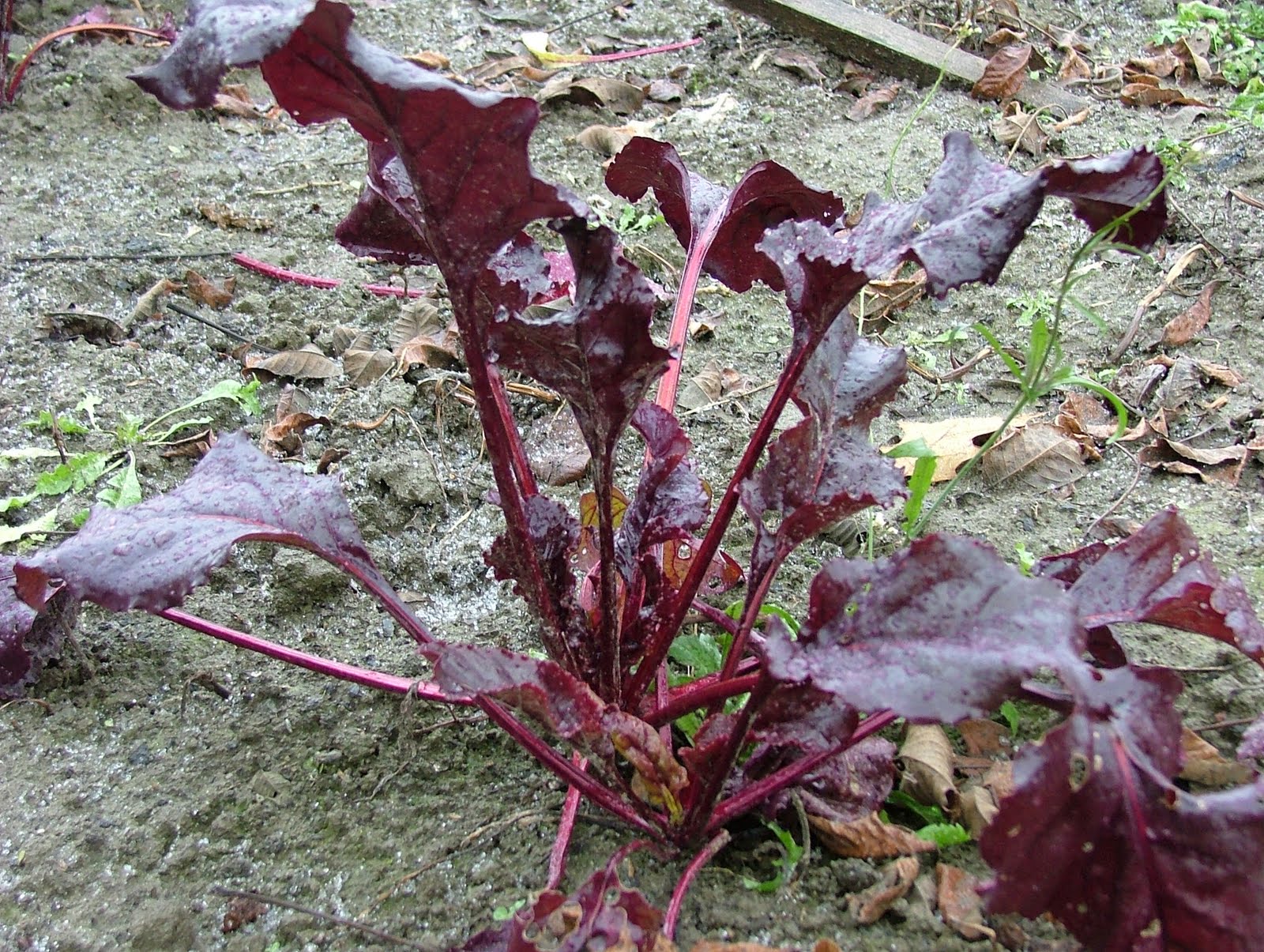
I made beet soup today, the kind that is often made throughout Russia and Poland. I looked at four different recipes and combined them to make up my own concoction.
Of course, all of the recipes call for beets. Some of them shred the beets, some boil, some hold off adding them until the very end to get the brightest color in the soup.
Another decision is whether to serve the soup hot or cold. I suppose it w

ould be better to puree the soup were you to serve it cold, but I took the more peasant-like approach and match-sticked the vegetables and served it warm. I also added meat, like some of the recipes call for, and sipping cold meat stew is not my favorite.
For the most part, the ingredients were from the farm. I went to the local co-op for crimini mushrooms and a leek. We didn’t plant leeks this year, because I had planned to plant the pencil-thin ones that I had stored in the root cellar over winter. Of course, farming got in the way, and the leeks rotted before I had a chance to plant them in the ground. So when I found that the co-op was out of leeks, I just went to the source, to Luna Bleu Farm, right down the road and dug two out of the ground.
Kyle brushed hogged the gardens today, getting ready for the first official “wintery mix” forecast of 2010. Bradford got three new chickens- black cochin bantams, and I helped the local trapper scope out the best place to set traps to capture the marauding coyotes that have taken a liking to our sheep. They’ve killed two and injured two.
First, it killed a lamb, and Drew and I set about scouting the area every day twice a day. Nothing for a week, and then, at three in the morning, I heard the frenzied calls that they utter after making a kill, when they call in the subordinate members of the pack for dinner.
That morning, the neighbor called and said that another sheep had been killed, bringing the total to two. One of the parents that she babysits for had seen it dead in the field as he drove to her house to drop off his child.
At the same time, Bradford came up from the barn and told us that there was a sheep in the chicken house. I struggled to figure out how this could be possible, since the flock was about a quarter of a mile away from the barn. Where was the rest of the flock?
Sure enough, when I went to check, there was a black yearling lamb in the barn, all by herself. She was limping a bit, and looked frantic. So I set out for the field where the rest of the flock was supposed to be. I carried the .22 rifle with me, but I didn’t really expect to get a shot at the coyote.
In the field, the sheep were scattered, and there was the body of number 46 green. It was the mother of the lamb in the barn. All the other sheep in the field side-stepped the gruesome, half eaten carcass, and were looking at me, I think reproachfully.
I gathered the horse up (who stays in the field to protect them, but has become quite deaf and a little blind in one eye), and led them back to the home pasture. One of the yearling lambs was badly injured, and the entire flock was so subdued, that when Kyle opened the gate, they willingly walked in without protest. The injured lamb stayed behind, dripping blood from her hind leg.
It’s a lamb that has become tame for no apparent reason. She has three freckles under each eye, and when I go out into the fields, she approaches me. She’s not a bottle lamb (one that I have raised by feeding it myself from a bottle), or one that an apprentice has taken a shining to and has been cuddled - just a ewe lamb that decided to be friendly. Good thing, because, had she been wild, I don’t think I could have helped her.
Instead, we gathered her up and brought her in the barn. I laid her on her side, and saw how badly she had been injured. A major artery was spewing blood so fast that it was not even pulsing - just a steady beet-red stream of blood.
While I fetched packing and tape to try and stop the blood, the ewe lay still, not flinching. I used old pillow cases that we use to store root vegetables in and duct tape to make a rough tourniquet. Then I gave her a dose of antibiotics that I have for emergencies and put her in with the llama.
When the trapper came, he looked at where the kills had occurred, and he chose two sites to set bait. He looked like an artist, a skilled painter of a canvas set for a battle scene. He set the traps and told me when to come and check them.
And I will, tomorrow, after this warm night of beet soup and pirozhki.


1 lb ground lamb
4 quarts chicken broth
1 ½ pound beets, cooked (boil until skins slip, then dice finely)
2 cups sauerkraut
1 ½ cups carrots, cut into matchsticks
1 parsnip (about 1 cup) cut into matchsticks
1 cup chopped celery, including leaves
1 cup coarsely chopped leek
1 cup onion, diced
1 tablespoon minced garlic
1 cup cubed potatoes
1 cup canned, stewed tomatoes
1 cup chopped crimini mushrooms
2 tablespoons red wine or cider vinegar
2 bay leaves
1 ½ teaspoons kosher salt
½ teaspoon ground black pepper
4 whole allspice berries
1 tablespoon lemon juice
1 tablespoon dill
sour cream

Bring the broth and meat to boil, then skim and set to simmer for 20 minutes. Add all of the vegetables except the tomatoes and mushrooms and simmer for another 25 minutes. Add the tomatoes, mushrooms, vinegar, bay leaves, salt, pepper, and allspice. Cook another 15 minutes. Check the seasoning, and add lemon juice if needed. Garnish with dill and sour cream in the bowls.


-Adapted from the following cookbooks: Bon Appetit Country Cooking (Viking Press 1978), Local Flavors, Deborah Madison (Broadway Books 2002), Great Dishes of the World, Robert Carrier (Random House 1964), The Martha Stewart Living Cookbook (Clarkson Potter Publishers, 2007).

Monday, August 2, 2010

August and Everything After


One of my most annoying traits is to tell everyone how many now- famous bands I’ve seen before they were famous.

U2 played at the tiny, SUNY, Delhi school in the Catskills, where I attended Veterinary Technology training in 1981, just after they came out with Sunday, Bloody Sunday. Bono jumped off twelve foot high speakers, and I touched The Edge’s hand. The gym held about 400 screaming people.

I saw Ani DiFranco diss obnoxious fans into submission at the Newport Folk Festival, Tracy Chapman launch her comeback at Smith College, Quiet Riot play in Northampton after the lead singer bought a futon from my sister and gave us free tickets to the show, and the Counting Crows the day before they went on Letterman.

The Avett Brothers played the Chandler and brought the crowd to its feet for three hours, much to the chagrin of some of the older chaperones. I saw Steve Earle silence a moody crowd in Burlington as he tried to pay tribute to Towns Van Zandt, when all they wanted was for him to sing songs about his Appalachian upbringing.

Music has always been important to me. It’s one of those wonders that I actually admire humans for. Watching the Random Canyon Growlers play in their hometown at the Chandler, with such pride and skill, thrilled me.

Yet music has nothing to do with farming. Right?

In August, everything becomes a routine. We’ve weeded for days on end, harvested almost everything at least once that we will grow throughout the season; sold, canned, frozen and butchered most of what the farm has to offer. So in August, the challenge is to keep it still in the present, still interesting.

I pull out new techniques as though I’m a parent trying to amuse a child on a camping trip on day five of rain.

Like music, I try to make it familiar and personal, to strike a chord with this farming experience, so whoever is here contributing sweat equity and brilliance to the farm feels as though there’s some reward for the contribution that they’re making- a melody.

In August, coming up with new things to teach the apprentices is tough, especially if they’ve been here for five months. So off we go to Geo’s farm to learn how he farms weed-free, or to Ray’s to butcher chickens, or to Kermit’s to cut and wrap a beef. We pick blackberries and blueberries and weed and weed and weed. We plant the crops that will mature in the fall, and we soak in the waning hours of sunlight, and in the chorus of the crickets and the cicadas: the signs of late summer and the need to fill our pantries chock-o-block full of provisions for the bare season to come: a symphony for sure, in full crescendo.

Cucumber Salsa

This recipe is decidedly vague because you need to insert your own amount of ingredients. I suggest tasting it after the inclusion of every ingredient, and adding more of something if you feel it’s not right. The proportions given here are about right.
1 part cukes
1 part green peppers
2 parts onions
1 or 2 hot peppers, depending upon your amount of substance P (i.e, how much heat you can take)
salt, pepper
1 part vinegar
a little olive oil
½ part chopped cilantro or lovage
3 cloves garlic to every cup of salsa
1 bunch of basil (about ½ cup)
Mix everything together and chill for about 30 minutes before eating with chips, as a side to white fish, or a black bean burrito.

Monday, July 26, 2010

Farming Firsts


When you first start farming, it’s not only physically exhausting, it’s mentally exhausting. I think this may be because in our mind’s eye, we tend to think of farming as the cattle rancher, lazily gazing over rolling hills at his cattle atop a trusted mount, or as the vegetable grower, gathering handfuls of brilliantly colored carrots and beets, freshly plucked from the fertile soil. Or maybe we think of the shepherdess, tending the flock and watching the lambs gamboling across the lush pasture that is rich with clover and timothy. They’re rewarding visions, bountiful ones. No one ever paints pictures of the calves stranded in the woods that need to be gathered back into the herd (it’ll take hours, and by the time you’re done, the cows are in the wrong grazing area). The long, straight rows of vegetables don’t tell the tale of countless, back-breaking, mind-numbing hours of seeding, then thinning and watering and weeding before the glorious harvest can begin. And the threat of fly-strike, where maggots attack the sheep to eat them alive, or coyotes lurk to shed the blood of the prized ewe aren’t really part of the happy farming bubble floating magically above our heads when we decide to begin to farm. No one can ever prepare us for how hard, tedious, boring, frustrating and maddening it can be. The urge to just fall to pieces and just cash it in for a good desk job are sometimes hard to resist.
One of my favorite summarizations of solutions to the pitfalls that farming can conjure up came from a review written by a “Wal-Mart Associate” in response to the book, Harvest: a Year in the Life of an Organic Farm, by Nicola Smith and Geoff Hansen (2003). He said that the book was depressing and full of death and by god, if he had something killing his chickens, he’d’ve done something about it.
Darnit, why didn’t I think of that? I could have just killed that mysterious thing doing in my hens, and then my cartons would be brimming full with eggs.
I guess if you’re one who chooses to dwell in your disasters rather than count your blessings, it may not be a venue you’d thrive in. I’m also pretty sure that getting rich is not the defacto option for this particular career choice.
But if it’s looking back over years of learning by following the advice of others in the community, by reading farming books, and by making mistakes that fulfills you, then farming is your baby.
The first piece of ground we plowed up to plant to vegetables looked white as snow. Not because it was winter, but because the former tenants had buried their plastic in the ground rather than dispose of it properly. It took us until this year not to plow up pieces of the plastic, or tires or cast-off shoes. Now, the garden, nicknamed the sunflower garden, is being transformed to our perennial beds, where Kyle’s strawberries, asparagus, black currants, horseradish, cranberries, cherries and random Ohio buckeye trees reside.
When I first strung electric fence for our sheep to graze, the pasture was tall with Canadian thistle, burdock, asters and goldenrod. These plants make good bee food, but aren’t much for sheep to eat. Constantly shifting them from one paddock to another all season long so that they grazed and fertilized has eventually transformed the soil into nitrogen-rich pasture that is now heavy with clover and timothy and other forbes. The lambs are strong and their meat is sweet and full of flavor from grazing and from staying with their mothers until they’re slaughtered.
Still, each year, there are pitfalls that I never imagined I’d encounter. Take the corn, for example. We usually don’t direct seed it because the crows eat it all up as soon as we stick the seed in the ground. But without a greenhouse this year, we were forced to plant it. And up it came. On Tuesday, I looked over 8 foot high stalks, laden with ears that are just coming ripe. On Wednesday, what I can only imagine was a tornado (but is referred to as a micro-bore or micro sheer, or some such other insurance lingo) flattened half the corn. Bam, just like that. I was so relieved that the guinea hens and turkeys hadn’t drowned in the 2.9 inches of rain in 58 minutes, that I hadn’t even thought to check the corn. After the storm, sitting on the new deck, the destruction couldn’t be hidden. But what’s even more amazing is that 5 days later, it has almost succeeded in standing itself up, BY ITSELF.
And then there’s this talk of a basil blight that has wiped out neighbor’s crops. Our basil is so strong and lush, that I find it hard to believe that it may succumb, like the tomatoes did last year. The tomatoes this year have been growing up and up and up, setting flowers, but not much fruit. One theory is that they aborted the fruit because of the intense heat we’ve been having. It certainly wasn’t because of too much nitrogen- our soil tests always come back as suggesting to put more nitrogen in the gardens.
I’ve been pickling like a mad woman, beets, beans and cukes. Everything is early. Never a dull moment, this farming thing. And if I think I can predict what’s around the next bend? Well that’s just plain foolish.

Friday, July 9, 2010

Sopa de Flor de Calabaza


I started a blog entry about a month ago, and it’s disappeared into cyberspace. It was about farming and its vagaries and unpredictability. I guess I’m just not used to Windows 7, which is much easier to maneuver around in than Vista, but still, there’s a learning curve, and the entry is gone. That’ll teach me to go more than a month without posting…
We are diligently scouting the gorgeous tomatoes that are now producing a cherry tom here and there, but are loaded with lush, green foliage and scores of blossoms. Thank goodness for heat and humidity and no rain. On the other hand, I feel like a Georgia field hand sometimes. My friend in Alabama is reporting weather conditions that are mirroring our own, only he’s used to them, and we’re not.
We have the abundance of August already- onions, chard, spinach, bok choi, head lettuce, peppers, artichokes, summer squash, beans. Then, there’s the late spring hold outs that are still chugging along. Asparagus and rhubarb are still around, although we’re not picking the asparagus anymore. The peas have succumbed to the heat, as have the radishes and cilantro. The basil is crazy and smells of summer.
Every year I take advantage of the squash blossoms. They’re so delicate and delicious, like morel mushrooms are. I fry them and stuff them with goat cheese and use them as garnish on refried beans. The best thing to do with them, though, is to make a soup. I have adapted this recipe from my favorite Mexican cookbook by Diana Kennedy (The Art of Mexican Cooking ,2008). It takes a ton of blossoms, so unless you have a farmer who’s willing to let you pick your own straight from the field, it’s a costly soup. But a treat worth trying, at least once a summer. Use the male flowers, not the females, that way, you won’t waste the fruits.

2 tbs butter
4 tbs finely chopped spring onions, greens and bulb
3 cloves fresh garlic, preferably hardneck
2 pounds fresh male squash, gourd or pumpkin blossoms
5 cups chicken broth (can substitute veggie, but it won’t taste as rich)
1 cup corn kernels
1 cup summer, zucchini or patty pan squash, diced
1 tsp epazote
1 cup heavy cream
Salt and pepper, to taste
Basil, shredded for garnish
Chile peppers, diced, for garnish

Fry the onion and garlic in the butter without browning (about 3 minutes). Stir the flowers into the pan, then cover and cook over low heat for the next 5 minutes. Uncover the pan, and cook until the flowers are tender and the juice has evaporated- this may take time, depending on how fresh the flowers are (like 10 minutes).
Put all but ¼ cup of the flowers in a food processor and blend with 2/3 cup of the broth until smooth. Put this mixture in a saucepan, then add the rest of the flowers , broth and vegetables and cook until tender. Add the epazote, salt and pepper and cook for 5 minutes more. Remove from the heat, stir in the cream and garnish with the shredded basil and chile cubes. Let the soup cool slightly before serving.

Wednesday, June 2, 2010

Snowflakes


April is our month to vacation, it seems. The lambs have been born, and the crops are not massively out of control. There’s still the greenhouses to water, the animals to care for, and the threat of cold nights that require the woodstove to keep burning, but it’s not May and June planting chaos, or July haying, or August harvest. So for the third year in a row, it’s off the farm for four days to stay on the beach.

This year, we had the great fortune to stay in a little cabin on the Cape owned by a friend of Kyle’s named Dave. They used to work together, back when Kyle was the biologist for the Cape Cod National Seashore; Dave’s in charge of everything that has to do with fire in the Park. He also coordinates the forest fire fighters for the Northeast.

Anyway, Sarit agreed to take care of the farm, solo, after being here for only a month, and saying things like “how do you tell the difference between a rooster and a hen,” and “isn’t it a little cruel to roast the lambs whole on a spit, I mean, don’t they feel it?”

Needless to say, she’s like a sponge, learning everything from the difference in comb size between hens and roosters to the fact that the animals are actually dead before they’re skewered and roasted on the fire. She’s already soloed at the farmer’s market, watched her bottle lamb be sold for meat and battled the quack grass in the hoophouse. She’s been stung by an orange-butted bumblebee and slogged through wet snow to harvest wild leeks. She’s a transplanting mad woman, and a mean winter squash bread maker. She’s even making friends with the cats, despite never ever having had a pet.

That everything is new to her and an adventure kind of came home to me on our vacation. It occurred to me, as Kyle, Bradford and I went on six mile hikes into the marsh, or 4 -mile walks along the Atlantic in search of whales, or 13- mile bike rides, that in the two and a half years that I lived on Cape Cod, I did nothing except drive to and from work. I hated the crowds, the cars, the tourists. So I’d go to the remote seabird colony off Chatham and do biology, and then it was back to the house in Wellfleet, in our unheated barn with no plumbing. I didn’t even know that just behind our house was a fabulous beach with gigantic cliffs and far-reaching sand dunes. I mean, when your job is walking miles of beach coast a day, who wants to spend your day off beachcombing?

This time, I watched the piping plovers dig their scrapes and court. I didn’t have to dig holes and post signs and string rope to keep the beachgoers out of their habitat. I didn’t have to find every pair and count their eggs and keep track of their chicks. I just watched them in the warm April sunlight, while Bradford and Kyle looked for rare birds and whales, and threw the Frisbee on the beach.

Back home, a record-breaking snowstorm greeted us. I saw the silver silhouette of a common snipe flying crazily into the snowflakes, and two hermit thrushes, burnt-red against the snow-white branches in the forest. We’ve postponed planting the onions until the weekend, when it’s forecasted to be in the 80s.

Sarit says that when she looks at snowflakes she believes that there is indeed a god. I know what she means. I look at Billy, the peacock, with his ridiculous show of feathers and can’t wrap my mind around the thought that this just happened randomly or for the sake of evolution- I mean why does it have to be so incredibly complex, when a simpler thing could just as easily perpetuate itself into the future? If evolution was the only answer, shouldn’t we all be amoebas?

Anyway, the vacation, and Sarit’s enthusiasm are good reminders for me to keep the joy in the job and not forget about the adventure and the wonder of every day, like a snowstorm in April, or a deserted beach where hundreds of people will gather soon.

Tuesday, April 13, 2010

Finding Truths- the Beautiful and the Cruel


“This morning I went next door to talk with the neighbor's yard man, Ben. Ben is a good man, a bit weak when it comes to beer; but a kind man that smiles more than anything. In the past, he would do odd jobs for my parents when he wasn't working for our neighbors. I asked him if he would be interested in driving out to our family land to take a tiller (b/c the tiller wouldn't fit in any vehicle we own) tomorrow morning early. I would pay him for his time and gas. Then Mr. C., our neighbor, came around from his garage and became the old angry white man. I was appalled at how he talked about Ben and to him. He said that he didn't think that Ben would be done with his work there at his place. I said well, what ever makes sense but if Ben wanted to drive out he could be back relatively early to finish his committed job there. I left to go back to our house and while I was picking up some lettuce I had planted in some raised beds, I over heard Mr. C. verbally abusing Ben. He said that "He" told Ben what to do and not the other way around. It was awful - I wanted to walk back down there and knock the shit out of the old man. But what made me the saddest was that Ben just took it...saying "Yes, Sir, Yes, Sir" Damn it. Even writing it right now makes me sick.’

Ah, the varying characteristics of southern culture that highlight the underpinnings of coming home.”

Today was my birthday. Kyle and Bradford wrapped special gifts for me; my parents called and nearly gave me a coronary ( I had forgotten that it was my birthday, and the only other people that call that early are the staff at the post office, telling me that chicks have arrived for my pick-up, and I didn’t remember ordering any chicks). I logged on and found 40 Facebook messages wishing me a happy day- so special, and thank you everyone for thinking of me. Mostly, I had a great time today, planting with Sarit in the greenhouse that our neighbors have loaned us space in to start our field plants.

I cooked fish and chips tonight, much to Sarit’s horror, not because she doesn’t love fish and chips, but because it was foreign to her that, besides reading cookbooks when I’m not working, my ideal birthday is to cook dinner for loved ones.

I am a little worried about how cold it is right now, and about our tender seedlings and the lambs outside, but I think all will be fine.

Bradford passed hunter safety, so he’s ready for turkey youth day in two weeks. He claims he’s going to get me two turkeys and a deer.

The opening quote is from a dear friend, one of our first “apprentices” on the farm. He shows up occasionally with his sleeping bag, and in all weather, and usually insists upon sleeping outdoors.

Prejudices are hard, especially when they’re home-based. I feel like it’s important to stick up for our more liberal ideas, though, even if they’re not popular, even while they’re not the status quo. I’m happy for my friend for realizing that he’s different, and ugly truth or not, this is where his home is, and he, I’m sure, will make a difference in the end.

The truth is, before this recession, people by and large thought that I was crazy for taking up farming. They reasoned that it was something that their parents had done out of necessity, to feed themselves, to keep them out of poverty. My colleagues considered it a waste of time that I had completed my Master’s degree in Biology, when, in the end, I turned to farming.

The reality is that we have not felt the recession on the farm. We are still growing food, still teaching people how to fend for themselves, still able to keep what we have and build upon it. True, we’re not rich. Our idea of vacation is four days on Cape Cod, not three weeks in the Bahamas. I’m not saying that three weeks in the Bahamas would be a bad thing- just not anything we’ve ever considered feasible. What I am saying is that it’s still perfectly possible for us to go together to Cape Cod, when for many, this is, and may never have been, an option.

I watched the Master’s golf tournament the other day. Not because I’m into golf, but because I’m into history. I wanted to see if it really meant nothing to Tiger Woods, to shatter his whole life and the lives of people around him. Could he really pull it off? He didn’t. He couldn’t. Kharma is pretty powerful that way.

So to my friend in the South, who is appalled by the behavior of his neighbors, but willing to fight for what he thinks is right, I thank him for this birthday missive. I’m 47, so it’s no longer a given to conclude that I’m middle-aged. But he’s still capable of claiming this status of being angry with what is considered acceptable. I’m happy that he’s willing to stand out and say that prejudices are what they are, that prejudices are alive and well, and we will encounter them wherever we are, and we should not be fearful to speak out against them.

Saturday, April 10, 2010

Tendril


Definition: 1) Thin plant part attached to support: a modified stem, leaf, or other part of a climbing plant, usually in the form of a thread that coils around and attaches the plant to supporting objects; 2) delicate twist or coil: a thin, wispy, curling, winding piece of something, especially of hair.

“One of the most striking characteristics of each ‘depression period’ is the tacit acknowledgement of city dwellers that ‘the farm is the safest place to live;’ for though there is each year a migration from the country to the city and a counter movement to the suburbs and a less pronounced one to more agricultural environment, the movement becomes an exodus when business takes a slump and employees are thrown out of work” – M. G. Kains in Five Acres and Independence

Every year I plant seeds, slips and tubers in the soil. Every year I revel in the discovery that they grow into plants. They’re different every year, these plants. Sometimes it’s sweet potatoes or okra or artichokes or Egyptian walking onions. But each season, the seeds are planted, and the wonder and mystic that they will ultimately produce food gives way to the reality that they finally do.

The hoop houses are chockablock full of lettuce, radishes, peas, beans, arugula, mesclun mix and head lettuce, kale, mizuna and spinach. A veritable garden of Eden, twisting and coiling and erupting in the warm soil of this freakish April. The days ahead seem to be more fitting of the season though; people are tired of me saying that it always snows on my birthday as we go into a series of 30 degree nights.

In the fields, the kale that survived the winter is yielding bushel after bushel of beautiful foliage. The spinach and bunching onions are giving us early delights; a sign to indicate what will soon come, when the milder nights and warm days wake up the farm and send it headlong into planting madness and then harvesting chaos.

I picked two bushels of kale and some nettles today while Sarit and Anna weeded the Hoop House East. It was a cold, long day for us, but it ended with satisfaction, having prepared for the upcoming farmer’s market, as well as rounding up all of the sheep to sequester them inside the warm, dry barn for the next few days. The sheep and the new lambs can handle the cold when it’s sunny out, but cold and damp are miserable and even deadly, and that’s what’s apparently ahead ( it is April in Vermont, after all).

Most years, we don’t have apprentices until the end of May, which usually coincides with school ending. This year has been different, with some of the apprentices from last year returning to help lamb (Greg, Shannon and Tali), and then Sarit starting in the middle of March (she didn’t want to miss anything) and Anna in the end of March.

Sarit, especially has seen the farm come to life by helping to anchor bits and pieces of it together: she helped me sort out all of the receipts from 2009 to complete the taxes; she helped shovel out the sheep pen with its winter’s full of manure. She stacked the wood from the tree Kyle cut down over the winter, and helped him inspect the honey bee hives that have survived; all not glamorous jobs, but necessary ones that make a whole out of this endeavor.

Yesterday, she and Anna made winter squash bread from the frozen squash that Tali and Janet harvested and froze last fall. She couldn’t find the nutmeg. That’s because I don’t have ground nutmeg; I actually have the brown seeds and a miniature grater to grind the nutmeg fresh. “Shut up! That’s not nutmeg! Why didn’t I know this was nutmeg?” I ask her if she knows that cinnamon is actually bark from a tree. “Noooo way!” How about the fact that coriander is the seeds from the cilantro plant. “Stop it!”

Kyle plowed a big chunk of the Cloverfield North garden today; the soil is already dry enough to work- about 8 days earlier than last year and 12 days earlier than 2008. He taught me how to move a round bale with the tractor to the paddock to feed the sheep. We have a new tractor-driven rototiller, so we won’t spend so much time using the ground driven, hand operated one. Kyle picked up a day at the park in Woodstock where he works as the ecologist; Bradford needs braces, and we don’t like tons of debt. I actually am working more on the farm as the result of not working at the animal hospital anymore, so I am trying to learn how to do these mechanized jobs that aren’t as appealing to me but are crucial to the farm’s existence.

The root cellar is completed, and the garden shed Kyle built that sits on top of the root cellar’s cement roof is done except for the windows. It looks fantastic. Now for that shop remodeling…

In all, the farm is held together by a zillion little threads, linking the mundane and the magical together to create a sense of security that I’ve only felt when I’ve worked on the land. It’s empowering at the same time that it is intimidating and daunting. Unpredictable, surprising, twisting and changing. A mish-mash of tendrils, all working to support living on the farm.